Showing posts with label Torchbearer. Show all posts
Friday, February 20, 2015
Torchbearer: Navigate Maze Conflict
Should your party stumble into a maze, treat it as a trap. They can successfully navigate it with a Dungeoneer test using the factors below:
Suggested Help: Cartographer, Scout
Maze Factors
Size: small, medium, labyrinthine
Hazards (choose all that apply): monsters, traps, temperature
Construction: man-made, natural, magical
Twist: Go to Navigate Maze Conflict.
Navigate Maze Conflict
Skills and Abilities for Disposition
Skill: Dungeoneer
Add to Rank: Will
Conflict Ability and Skills Used by Action
Attack: Dungeoneer
Defend: Scout or Cartographer
Feint: Dungeoneer
Maneuver: Scout or Cartographer
Maneuver: Characters who succeed on a Maneuver with a margin of 3 successes may perform a special action: Loot. Roll 1d6 on the table below, and then roll on the appropriate subtable:
Loot
1-2: Stuff
3-5: Gear
6: Valuables
Suggested Compromises:
Minor: Exhausted or Angry
Solid: The characters lose a piece of gear in the maze
Major: Any map they make of the maze is inaccurate. Should they pass back through it, they will need to test again.
Labyrinth of Trials
Might: 4
Nature: 4
Descriptors: Misdirecting, Enclosing, Sprawling
Conflict Disposition
Navigate Maze: 9
Conflict Weapons
Attack: +1D Winding Caverns
Defend: +1D You've Been Here Before, Haven't You?
Feint: +1D Dead End
Special: The turn clock advances at the top of each round of this conflict. During this phase, players may light new torches and eat food. If the Hungry and Thirsty Condition is earned, the Conflict Captain chooses which member of the team suffers a loss to their disposition. Reduce maximum disposition for the duration of the conflict.
Friday, February 13, 2015
Wyrdwood Tokens
Level 3 Magic Items
At the center of the Hall of Masters, there is a large, ornately carved stone table. The table is an ancient map of Fyndel Forest. Several carved wooden tokens have been placed on it. Upon further inspection, these tokens seem to be living, autonomous creatures. They are actually tied to the various creatures living in Fyndel Forest. The table is dotted with several piles of ash, as if some tokens have been burned.
Carved by the Druids of Fyndel, the Wyrdwood tokens have the likeness of a Spider, a Giant, a Giant Wasp, a Dragon, and a Goblin. All of the tokens share the following common abilities:
At the center of the Hall of Masters, there is a large, ornately carved stone table. The table is an ancient map of Fyndel Forest. Several carved wooden tokens have been placed on it. Upon further inspection, these tokens seem to be living, autonomous creatures. They are actually tied to the various creatures living in Fyndel Forest. The table is dotted with several piles of ash, as if some tokens have been burned.
Carved by the Druids of Fyndel, the Wyrdwood tokens have the likeness of a Spider, a Giant, a Giant Wasp, a Dragon, and a Goblin. All of the tokens share the following common abilities:
- Their eyes glow when a creature of the token's type is near
- While holding the token, characters may communicate with those creature as if they were fluent in its native language
Additionally, each token has a unique ability. After using it, the token turns to ash.
- Spider: Create 100' of silken rope.
- Giant: For a single turn, the bearer has giant's strength. Double the rating of Health or a Health-based skill for a single roll.
- Wasp: During a single round of combat, an arrow or bolt fired from a crossbow splits into many and swarms the enemy. The character who uses this decides how to reduce the enemies disposition in the turn it was used.
- Dragon: Engage in any type of conflict, regardless of Order of Might, counting the party as equal.
- Goblin: The token transforms into a key capable of opening a single lock.
Wednesday, February 11, 2015
Starved for Cash
Two sessions ago my players found some strange wooden tokens on a 3D diorama of the forest they have been exploring. These tokens were moving independently of any force they could discern. The players threw them in their packs and hoofed it back to town to pawn their loot. It took every ounce of restraint to stop myself from shaking one of them and screaming, "FOR THE LOVE OF GOD DO NOT SELL THESE."
But I didn't. I just quietly smirked as they they traded a set of magic tokens to the vendor for a stack of gold without even bothering to identify them. To be fair, my players were in rough shape. They had recently lost a fight to some bats (food, as one of my players called them) and had very little in the way of cash. Even if they knew what these things could do, they likely still would have sold them to fund their next trek to the caves below Fyndel Forest.
Monday, August 11, 2014
Review: Torchbearer GM Screen
GM screens are always one of the more trickier products to produce. While all accomplish the basic task of offering the GM's notes some much needed concealment, few are more than folded cardboard wrapped in some cool (or not) art. All of the good screens double as quick reference documents. I'm happy to say that the Torchbearer GM screen is one of the good ones.
The art depicts a sprawling dungeon in the typical light fantasy fare we've seen in all of the other Torchbearer products. At the upper levels are the archetypal fantasy creatures most people are familiar with: orcs, goblins, and the like. The lower levels are filled with dragons, demons, and other abominations. I particularly like this illustration because it reinforces the notion that you don't need to travel far and wide to find adventure, you just need to keep digging deeper.
This screen is smaller than the ones you normally find for use with the world's most popular roleplaying game. This is a good thing! Maybe I'm just short or need to better match my chairs to my gaming table, but I always feel like I'm straining to see over the top of those screens to make eye contact with the players. This screen provides adequate coverage without being obstructive.
One thing that did strike me as odd is that only two of three player-facing panels have art on them. The other one has the rules for conflicts printed on it. It's not an issue for me because I like the size of the screen and the art is really the least important part of this product, but I have a feeling that some may wonder if they couldn't have made a larger screen and put all of the rules on one side.
The hardest and most important part of designing a good GM screen is deciding which rules to include. Torchbearer is among the best as it includes rules for the Grind, Camp, Town, Light, Equipment (how much space they take up, how much they cost), Conflicts, and Loot tables, among other things. In short, there is not a session that goes by that almost all of the rules included do not get used, and having a quick reference to them will drastically cut down on the time spent flipping through the rulebook.
I think it speaks volumes that the only real criticism I can muster is that there is too much useful information included on the Torchbearer GM screen. Some may take issue with the size, but its utility for quick rules-reference far outweighs any form factor gripes. This product joins the Torchbearer Player's Deck as an essential play aid.
Friday, July 4, 2014
More Magic Items for Torchbearer
Sunshard Ring
Once per adventure phase, a character may summon the mpower of this ring. It provides light as a torch that cannot be blown out or smothered in any way.
Level: 1
Type: Magical Clothing
Inventory: Hands/ Worn 1
Everflask
This flask refills itself at the beginning of each phase.
Level: 1
Type: Magical Equipment
Inventory: Pack 1 or Replaces Waterskin slot
Oracle Blade
Once per conflict, before revealing action, guess what your opponent scripted. If correct, you may re-script.
Level: 2
Type: Magical Weapon (Sword)
Inventory: Be;t/Weapon or Hand/Carried 1
Blood Drinker Axe
During a Kill, Capture, or Drive Off conflict, you may recover 1 point of disposition for every 2 successes over the Ob on an Attack action.
Level: 3
Type: Magical Weapon (Battleaxe)
Inventory: Hand/Carried 2
Mirror Shield
When being targeted by a spell, roll a number of dice equal to the caster. If the spell is successfully cast but you roll more successes than the caster, it is reflected and affects them instead.
Level: 4
Type: Magical Weapon (Shield)
Inventory: Hand/Carried 1 or Torso/Worn 1
Once per adventure phase, a character may summon the mpower of this ring. It provides light as a torch that cannot be blown out or smothered in any way.
Level: 1
Type: Magical Clothing
Inventory: Hands/ Worn 1
Everflask
This flask refills itself at the beginning of each phase.
Level: 1
Type: Magical Equipment
Inventory: Pack 1 or Replaces Waterskin slot
Oracle Blade
Once per conflict, before revealing action, guess what your opponent scripted. If correct, you may re-script.
Level: 2
Type: Magical Weapon (Sword)
Inventory: Be;t/Weapon or Hand/Carried 1
Blood Drinker Axe
During a Kill, Capture, or Drive Off conflict, you may recover 1 point of disposition for every 2 successes over the Ob on an Attack action.
Level: 3
Type: Magical Weapon (Battleaxe)
Inventory: Hand/Carried 2
Mirror Shield
When being targeted by a spell, roll a number of dice equal to the caster. If the spell is successfully cast but you roll more successes than the caster, it is reflected and affects them instead.
Level: 4
Type: Magical Weapon (Shield)
Inventory: Hand/Carried 1 or Torso/Worn 1
Friday, June 20, 2014
Masterwork Items in Torchbearer
Once per Kill, Drive-Off, or Capture Conflict, the player may choose to re-roll* a single failed die while using this weapon.
Armor
Once per Kill, Drive-Off, or Capture Conflict, the player may choose to re-roll* their die when testing for armor damage.
Items
Once per adventure phase, in a test where a masterwork item was used as supplies, they may re-roll* a single failed die. This item must grant a +1D to the test in order to use the ability.
Cost
The cost for all masterwork items is equal to double their Ob. It is up to the GMs discretion whether or not they are available for purchase.
*The normal rules for re-rolling apply. This ability may not be used to re-roll dice that have already been re-rolled.
Wednesday, June 18, 2014
Torchbearer GM Screen
The folks at BWHQ recently announced that they are in the process of putting together a GM screen for Torchbearer! Pre-orders were restricted to the backers of the Kickstarter, but everyone else can get in on the action this August.
Friday, June 13, 2014
Torchbearer: Familiars
Arcane Bond
During the course of their travels, Magicians often form special bonds with a creature or unlock powers hidden deep within objects. A Magician who chooses this level benefit has merely done the proper rituals necessary to create this bond and must still find a suitable creature or object to gain any effect. As with spells, your Mentor can provide a familiar. Others may test Circles to find someone in town who can help or find a suitable familiar in the wild at the GMs discretion.
Sample Familiars
Brain in a Jar: +1D to Lore Master
Chameleon: Anytime Nature is taxed, reduce the amount by 1
Crow: +1D to Scavenger
Dog: +1D to Pathfinder
Eagle: +1D to Scout
Fox: +1D to Criminal
Moth: Whenever a light source would go out, roll a d6. On a roll of 4+, it stays lit for another turn
Owl: +1D to Hunter
Pseudodragon: +1D to Arcanist
Rat: +1D to Dungeoneer
Spider: +1D to Alchemist
Toad: Increase disposition of caster by 1 during a conflict
The benefits that grant +1D to a skill are neither help nor wises and therefore are not affected by conditions. Additionally, if the Magician is using Beginner's Luck on a skill, this die is added after reducing the number of dice by half.
Losing a Bonded Creature/Item
If a creature is killed as part of a twist or compromise or if the item is lost or stolen, the bond is broken. Tax the Magician's Nature by their current level.
Wednesday, June 11, 2014
Torchbearer on Roll20.net
Courtesy of SilverSeraphim on the forums. To use it, login to Roll20.net (make a free account if you don't have one). Before launching your campaign, go to Details > Campaign Settings. Scroll down to the Character Sheet section and select Torchbearer from the drop-down list.
Friday, June 6, 2014
Fyndel Forest: The Trees Are Dreaming
Fyndel Forest came to be known as the Dreamwood for its protean nature. The trees change shape, the weather cycles out of season, and if you go down to the river you may find wine flowing across its banks. Skeptics dismiss this as simple illusion, the work of some hedge wizard, but anyone who has spent time in these woods can you tell you the forest's dreams are real.
Once per day, roll a d66 and apply the appropriate effect. Some of these effects are meant purely to be cosmetic. Others may increase the difficulty of some actions. As a rule, simply count these as a factor when figuring the obstacle for any action that could reasonably be affected by it. Additionally, this table may be used to introduce magic twists for failed spell attempts.
11 Foiliage: the leaves are made of gold and silver. If they are removed from the forest they turn to mulch.
12 Shifting Roots: the brush constantly readjusts itself making tracking, pathfinding, and mapping difficult.
13 The forest is asleep. No effect.
14 The forest is asleep. No effect.
15 Blinding Miasma: heavy fog blankets the forest obscuring vision.
16 Warp Pool: all bodies of water become portals to other parts of Fyndel Forest.
21 Deadwood: the trees are made of bone.
22 Seagrove: the floor of the forest is covered in seashells.
23 The forest is asleep. No effect.
24 The forest is asleep. No effect.
25 Early Winter: heavy snow is falling and turns pass as in the Winter phase.
26 Root Maze: Players cannot leave this area of the forest. If they cross a border, they re-enter on the opposite side.
31 Topiary Jungle: the trees have contorted themselves into the shapes of beasts and animals.
32 Beachwood: the floor of the forest is covered in sand.
33 The forest is asleep. No effect.
34 The forest is asleep. No effect.
35 Cloudburst: heavy rain and thunderstorms.
36 Emerald Dreams: roll on this table again--the characters dream this effect will happen, and it does the following day.
41 Palette Swap: all of the colors in the forest are inverted.
42 Wet Roots: campfires will not start and torches have a 50% chance of going out each turn.
43 The forest is asleep. No effect.
44 The forest is asleep. No effect.
45 Smoke Without Fire: a cloud of heavy, black smoke hangs in the forest air.
46 Trick or Treat: a mysterious fruit seems to have grown on all of the trees.
51 Water To. . .: Roll 1d6. All bodies of water are full of (1) wine, (2) vinegar, (3) salt water, (4) blood, (5) acid, or (6) oil.
52 Eversun: even after the sun has set, the forest is still as light as day.
53 The forest is asleep. No effect.
54 The forest is asleep. No effect.
55 Mirewood: the water levels rise, flooding Fyndel and turning it into a swamp.
56 Evernight: even after the sun has risen, it remains as dark as night.
61 Tempest: Roll 1d6. It is raining (1) frogs, (2) scorpions, (3) glass, (4) stones, (5) Blood, or (6) oil.
62 Voodoo Stones: carvings of the adventurers appear on the stones.
63 The forest is asleep. No effect.
64 The forest is asleep. No effect.
65 Rootwatch: there are eyes on the leaves.
66 Giant Growth: All of the trees and plants grow to massive stature.
Tips for reading the dice: If the 1's column would be a 3 or 4, there will be no effect no matter the 10's column. You can also read the dice two ways (ie, you could choose either 12 or 21 and apply whichever effect you like better).
Once per day, roll a d66 and apply the appropriate effect. Some of these effects are meant purely to be cosmetic. Others may increase the difficulty of some actions. As a rule, simply count these as a factor when figuring the obstacle for any action that could reasonably be affected by it. Additionally, this table may be used to introduce magic twists for failed spell attempts.
11 Foiliage: the leaves are made of gold and silver. If they are removed from the forest they turn to mulch.
12 Shifting Roots: the brush constantly readjusts itself making tracking, pathfinding, and mapping difficult.
13 The forest is asleep. No effect.
14 The forest is asleep. No effect.
15 Blinding Miasma: heavy fog blankets the forest obscuring vision.
16 Warp Pool: all bodies of water become portals to other parts of Fyndel Forest.
21 Deadwood: the trees are made of bone.
22 Seagrove: the floor of the forest is covered in seashells.
23 The forest is asleep. No effect.
24 The forest is asleep. No effect.
25 Early Winter: heavy snow is falling and turns pass as in the Winter phase.
26 Root Maze: Players cannot leave this area of the forest. If they cross a border, they re-enter on the opposite side.
31 Topiary Jungle: the trees have contorted themselves into the shapes of beasts and animals.
32 Beachwood: the floor of the forest is covered in sand.
33 The forest is asleep. No effect.
34 The forest is asleep. No effect.
35 Cloudburst: heavy rain and thunderstorms.
36 Emerald Dreams: roll on this table again--the characters dream this effect will happen, and it does the following day.
41 Palette Swap: all of the colors in the forest are inverted.
42 Wet Roots: campfires will not start and torches have a 50% chance of going out each turn.
43 The forest is asleep. No effect.
44 The forest is asleep. No effect.
45 Smoke Without Fire: a cloud of heavy, black smoke hangs in the forest air.
46 Trick or Treat: a mysterious fruit seems to have grown on all of the trees.
51 Water To. . .: Roll 1d6. All bodies of water are full of (1) wine, (2) vinegar, (3) salt water, (4) blood, (5) acid, or (6) oil.
52 Eversun: even after the sun has set, the forest is still as light as day.
53 The forest is asleep. No effect.
54 The forest is asleep. No effect.
55 Mirewood: the water levels rise, flooding Fyndel and turning it into a swamp.
56 Evernight: even after the sun has risen, it remains as dark as night.
61 Tempest: Roll 1d6. It is raining (1) frogs, (2) scorpions, (3) glass, (4) stones, (5) Blood, or (6) oil.
62 Voodoo Stones: carvings of the adventurers appear on the stones.
63 The forest is asleep. No effect.
64 The forest is asleep. No effect.
65 Rootwatch: there are eyes on the leaves.
66 Giant Growth: All of the trees and plants grow to massive stature.
Tips for reading the dice: If the 1's column would be a 3 or 4, there will be no effect no matter the 10's column. You can also read the dice two ways (ie, you could choose either 12 or 21 and apply whichever effect you like better).
Wednesday, June 4, 2014
Six New Classes for Torchbearer!
Monday, June 2, 2014
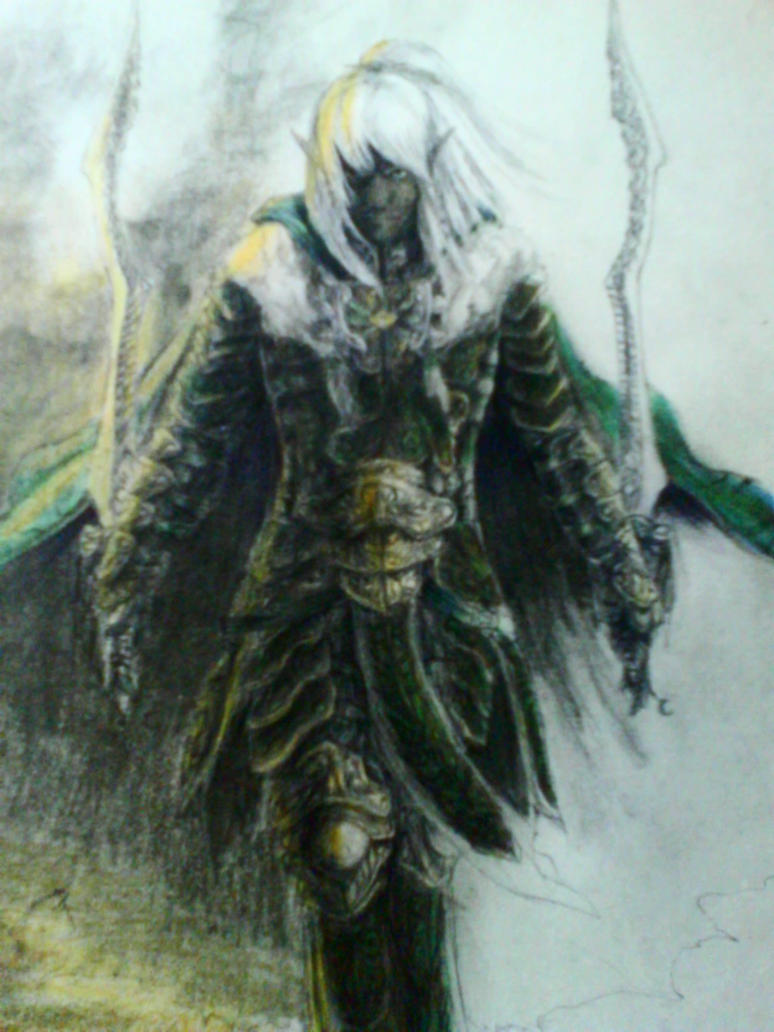
Dark Elves: Torchbearer Edition
Class: Raider
Raw Abilities: Will 4, Health 4
Skills: Fighter 3. Ritualist 3, Theologian 3, Scholar 2, Scout 2, Dungeoneer 2
Trait: Born From Shadow
Weapons: Crossbow, Sword, and Dagger
Armor: Leather and Chainmail
Born From Shadow
At the dawn of the world, the First Born cast out those of their kin with impure intentions, driving them deep underground. Over the ages, their skin became the color of pitch, their hair lost all pigment, and they found a certain comfort in the darkness. Those Born from Shadow can find a way when there is no clear path, but are often blinded by that which is in plain sight.
Where is Your Home?
Below are two new settlements meant to represent some of the many possible locations of the Underdark, the Dark Elves' home.
Drow Citadel (Dark Elves Only)
Skills: Weaver, Theologian, Alchemist
Traits: Cunning, Jaded
Isles of the Underground Sea (Dark Elves Only)
Skills: Carpenter, Laborer, Sailor
Traits: Bitter, Rough Hands
Optional Rule: Unless you're playing a campaign set within the Underdark, it is very unlikely that you will visit your home. Players may choose to take any of the normal settlements within the books, but they may only choose between Loner or Stoic as the home trait choices to reflect their status as outsiders.
Wises
Choose one of the following: Poison-wise or Elf Lore-wise; additionally, take a second wise of your choice.
Nature
If you're a Dark Elf, write Nature: Dark Elf on your character sheet. Your descriptors are Spiting, Remembering, and Hiding.
Dark Elf Nature Questions
Do you take pleasure in every opportunity to spite your enemies? Or do you save your energy for more important matters?
As Elf Ranger.
Dark Elf Raider Levels
When they gain a level, Dark Elves choose between a Cleric prayer or a special level benefit. This section describes the special level benefits. Gaining new prayers is described in the Divine Power section.
Level 1
Raider: Your level 1 title is Raider. Your level 1 benefit is the ability to use Ritualist to cast one first circle prayer of your choice, wear leather and chainmail armor, and wield a dagger, crossbow, and sword.
Level 2
Eldritch Sink: Dark Elves are supernaturally resistance to magic. All attempts to affect a Dark Elf with magic, helpful or harmful, suffer -1s.
Level 3
Essence of the Earth: As the level 3 Elf ability
Level 4
Fearless: As the level 4 Elf ability
Level 5
Shadow Dancer: Dark Elves are adept at wielding two weapons, either two swords or a sword and a dagger. While doing so, they may add +1D to all Fighter rolls during a Kill, Capture, or Drive Off Conflict. If wielding two Swords, they may choose two actions that receive a +1D bonus.
Raw Abilities: Will 4, Health 4
Skills: Fighter 3. Ritualist 3, Theologian 3, Scholar 2, Scout 2, Dungeoneer 2
Trait: Born From Shadow
Weapons: Crossbow, Sword, and Dagger
Armor: Leather and Chainmail
Born From Shadow
At the dawn of the world, the First Born cast out those of their kin with impure intentions, driving them deep underground. Over the ages, their skin became the color of pitch, their hair lost all pigment, and they found a certain comfort in the darkness. Those Born from Shadow can find a way when there is no clear path, but are often blinded by that which is in plain sight.
Where is Your Home?
Below are two new settlements meant to represent some of the many possible locations of the Underdark, the Dark Elves' home.
Drow Citadel (Dark Elves Only)
Skills: Weaver, Theologian, Alchemist
Traits: Cunning, Jaded
Isles of the Underground Sea (Dark Elves Only)
Skills: Carpenter, Laborer, Sailor
Traits: Bitter, Rough Hands
Optional Rule: Unless you're playing a campaign set within the Underdark, it is very unlikely that you will visit your home. Players may choose to take any of the normal settlements within the books, but they may only choose between Loner or Stoic as the home trait choices to reflect their status as outsiders.
Wises
Choose one of the following: Poison-wise or Elf Lore-wise; additionally, take a second wise of your choice.
Nature
If you're a Dark Elf, write Nature: Dark Elf on your character sheet. Your descriptors are Spiting, Remembering, and Hiding.
Dark Elf Nature Questions
Do you take pleasure in every opportunity to spite your enemies? Or do you save your energy for more important matters?
- If you pleasure in spiting your enemies, increase your Nature by one.
- If you save your energy, replace or increase home trait with Thoughtful or Calm.
- If you remember the faces, increase Nature by one.
- If you found it within yourself to forgive, replace your home trait with Generous or Honorable/
- If you prefer to hide, increase your Nature by one and decrease your starting Fighter by one.
- If you desire to reclaim your place, your Nature and Fighter remain unchanged.
As Elf Ranger.
Dark Elf Raider Levels
When they gain a level, Dark Elves choose between a Cleric prayer or a special level benefit. This section describes the special level benefits. Gaining new prayers is described in the Divine Power section.
Level 1
Raider: Your level 1 title is Raider. Your level 1 benefit is the ability to use Ritualist to cast one first circle prayer of your choice, wear leather and chainmail armor, and wield a dagger, crossbow, and sword.
Level 2
Eldritch Sink: Dark Elves are supernaturally resistance to magic. All attempts to affect a Dark Elf with magic, helpful or harmful, suffer -1s.
Level 3
Essence of the Earth: As the level 3 Elf ability
Level 4
Fearless: As the level 4 Elf ability
Level 5
Shadow Dancer: Dark Elves are adept at wielding two weapons, either two swords or a sword and a dagger. While doing so, they may add +1D to all Fighter rolls during a Kill, Capture, or Drive Off Conflict. If wielding two Swords, they may choose two actions that receive a +1D bonus.
Friday, May 30, 2014
101 Wises for Torchbearer
- Aasimar-wise
- Armor-wise
- Ambush-wise
- Betrayal-wise
- Beholder-wise
- Bugbear-wise
- Basilisk-wise
- Bone-wise
- Centaur-wise
- Crypt-wise
- Chimera-wise
- Cavern-wise
- Cult-wise
- Castle-wise
- Dragon-wise
- Demon-wise
- Desert-wise
- Disguise-wise
- Ettin-wise
- Egg-wise
- Earthquake-wise
- Forest-wise
- Foul Odor-wise
- Fungus-wise
- False Idol-wise
- Flood-wise
- Goblin-wise
- Giant-wise
- Ghost-wise
- Gargoyle-wise
- Gold-wise
- Hobgoblin-wise
- Hidden Entrance-wise
- Horse-wise
- Hag-wise
- Herb-wise
- Imp-wise
- Idol-wise
- Inscription-wise
- Illusion-wise
- Jest-wise
- Jewel-wise
- Kobold-wise
- Key-wise
- King-wise
- Knot-wise
- Lich-wise
- Lake-wise
- Lock-wise
- Labyrinth-wise
- Lycanthrope-wise
- Manticore-wise
- Mindflayer-wise
- Mountain-wise
- Merfolk-wise
- Magic Carpet-wise
- Naga-wise
- Necromancy-wise
- Orc-wise
- Ooze-wise
- Oracle-wise
- Ogre-wise
- Owlbear-wise
- Poison-wise
- Portal-wise
- Pirate-wise
- Plains-wise
- Planes-wise
- Quicksand-wise
- Riddle-wise
- River-wise
- Ritual Sacrifice-wise
- Ruins-wise
- Rune-wise
- Satyr-wise
- Sea-wise
- Swamp-wise
- Spider-wise
- Skeleton-wise
- Shrine-wise
- Statue-wise
- Serpent-wise
- Temple-wise
- Tomb-wise
- Trap-wise
- Troll-wise
- Tiefling-wise
- Tsunami-wise
- Underdark-wise
- Unicorn-wise
- Vampire-wise
- Valley-wise
- Volcano-wise
- Vault-wise
- Worg-wise
- Witch-wise
- Ward-wise
- Wand-wise
- Wine-wise
- Yuan Ti-wise
- Zombie-wise
Friday, May 23, 2014
Wednesday, April 23, 2014
Torchbearer Cheat Sheets
Check out these cheat sheets made by lowlyminion on the Torchbearer forums. Follow him/her on twitter @lowlyminion.
Monday, April 21, 2014
Monstrous Workshop: Putting It All Together
Before even thinking about how to represent your creature within the framework of the rules, you need a concept. Given that we have 40 years worth of roleplaying game materials to serve as inspiration, I won't waste any time on where to turn for ideas. The only thing that is necessary is that turning the concept into a creature excites you.
The Torchbearer rulebook covers a lot of the classic monsters, but is missing marine-based monsters. For this reason, I'm building a variant of a Giant Crab. Only, that's kind of boring. I want this creature to be just as feared as a Dragon. I'm thinking it lays dormant in its caves for years at a time before emerging from the deeps to hunt and feast. For the time being, let's call this thing the Cragon.
Might: While I want it to be as feared as a Dragon, I don't want it to be quite as powerful. Might 6 seems a little steep for this creature. If I were building an average Giant Crab Might 4 would be appropriate, similar to a Stone Spider, but I want this thing to be a little stronger. Might 5 feels perfect. Without the aid of magic, players cannot Kill or Capture the Cragon, but they can drive it off each time it wakes from its slumber to feed. Or they can do what most people do, and run at the first sight of it.
Nature: Since the Cragon isn't quite as powerful as a Dragon I'm going to assign it Nature 6 for the moment, right in between keeping it equal and within two steps of its Order of Might. Depending on the kinds of weapons it has, it will reliably be able to throw 3-4 successes, enough to challenge players but not overwhelm them.
Nature Descriptors: The first thing that pops into my head is Scuttling. Looking at Merriam Webster, I am delighted to find that this word has an additional meaning of which I was unaware.
to cut a hole through the bottom, deck, or side of (a ship); specifically : to sink or attempt to sink by making holes through the bottom
This is perfect.
Feasting seems appropriate as well, but it's a little flat given that this thing basically feeds on an entire village once every few years. I'm remembering the Nature question I wrote, "Does the sun fill your wings as you rule your from kingdom high above the clouds or do you wear a crown fashioned from the bones of dead sailors, commanding the waves that crash on every shore?" The Cragon doesn't wear a crown, but it certainly feasts on the bones of dead sailors. That's two.
I'm a little stumped for the third descriptor. I didn't realize what I found boring about just making a Giant Crab, but I think it has to do with its anatomy. Once you get beyond the claw, there is not much there. Crushing would probably be the appropriate descriptor, but I'm not sure that I want something that plain. Let's think more about this.
The name Cragon, originally just a playful portmanteau meant to sum up my concept, seems to suggest something a little different. It definitely doesn't have wings or a breath weapon, but maybe it has a tail? The creature I'm imagining now looks something closer to a giant lobster or maybe a marine-based scorpion, even. Crushing seems a lot more interesting in this context. Let's leave it here knowing that it might change.
Conflict Dispositions: This creature is definitely geared towards the martial Conflicts and its dispositions are going to reflect this. Still, I tried to make this thing more than just a killing machine.
- Kill: Those foolish enough to go to blows with this thing will have a hard time taking this thing down.
- Capture: Capturing this thing isn't going to be any easier.
- Drive-Off: Most people are going to go for this option when taking it on. The Cragon definitely feeds down the food chain, and if its prey makes a stand they could potentially drive it off. Lose, however, and you'll likely find yourself on its dinner plate.
- Pursue: The Cragon has a lot of things going for it, but speed is not one of them. Those with the good sense to run will likely live to see another day as this thing scurries frantically and clumsily after its prey.
Conflict Weapons: There are really three things that jump out to me about the Cragon: the claw, the tail, and it's shell. Looking at it's Scuttling Nature, I remember that crabs often dig/burrow into the sea floor, as well. I'm going to assign the names as I assign them to the conflict below:
- Kill
- Attack: +2D Claw Vice
- Defend: +1D Parry and Scuttle
- Maneuver: +1D Burrow
- Feint: +1D Tail Sweep
- Capture
- Attack: +2D Claw Vice
- Maneuver: +1D Burrow
- Feint: +1D Tail Sweep
- Drive Off
- Attack: +2D Claw Vice
- Defend: +1D Parry and Scuttle
- Maneuver: +1D Burrow
- Feint: +1D Tail Sweep
- Pursue
- Attack: -1D Frantic Scuttle
- Maneuver: +1D Burrow
- Feint: +1D Claw Vice
Instinct: I want something that speaks to its feasting ritual--Always feast in my lair.
Special: The Cragon's carapace functions like plate armor in Kill, Capture, and Drive Off conflicts. While the Cragon is burrowed, change its bonus for any Feint action to +1s. Additionally, all character actions taken while the Cragon is burrowed suffer a -1D penalty. If the Cragon scripts Attack, it leaves its burrow removing these bonuses and penalties.
The Cragon
Deep beneath the black waters of the sea, the Cragon sleeps for years at a time. Upon waking, it swims to the surface, attacking ships and coastal towns, capturing as much food as possible before returning to its lair to feast. While it only wakes once every 10 years or so, its reign of terror often lasts weeks and The Cragon has completely destroyed entire towns. No one has ever seen its lair, but it is rumored to be full of the sunken treasure of a dozen fleet of ships by now.
Might: 5
Nature: 6
Descriptors: Scuttling, Feasting on the Bones of Dead Sailors, Crushing
Conflicts
- Kill: 14
- Attack: +2D Claw Vice
- Defend: +1D Parry and Scuttle
- Maneuver: +1D Burrow
- Feint: +1D Tail Sweep
- Capture: 9
- Attack: +2D Claw Vice
- Maneuver: +1D Burrow
- Feint: +1D Tail Sweep
- Drive Off: 6
- Attack: +2D Claw Vice
- Defend: +1D Parry and Scuttle
- Maneuver: +1D Burrow
- Feint: +1D Tail Sweep
- Pursue: 3
- Attack: -1D Frantic Scuttle
- Maneuver: +1D Burrow
- Feint: +1D Claw Vice
Instinct: Always feast in my lair.
Special: The Cragon's carapace functions like plate armor in Kill, Capture, and Drive Off conflicts. While the Cragon is burrowed, change its bonus for any Feint action to +1s. Additionally, all character actions taken while the Cragon is burrowed suffer a -1D penalty. If the Cragon scripts Attack, it leaves its burrow removing these bonuses and penalties.
Friday, April 18, 2014
Monstrous Workshop: Special
Flipping through the "Denizens" chapter of the Torchbearer rulebook, you'll notice most creatures have a "Special" category in their statblock. These entries detail any special advantages the creatures have, ways in which they break break the rules, and further define their behavior. With few exceptions, any creature you make should have a "Special" entry. The book is rife with examples to steal or model your ideas upon, which I've catalogued below.
A simple way to decide what your creature's Special should be is to think what a Lore Master/Hunter roll would reveal about this creature. Sure, we know a red dragon has a breath weapon, but that's rather obvious and doesn't really get to the unique thing about the creature. However, saying, "Red Dragons are the most covetous of all--they sleep with one eye open so they can count their gold in their dreams and watch for thieves who would try to sneak into their lair," does get at this. A simpler example is Trolls. It's hard not to think about the Troll's weakness to fire and their regenerative abilities first and foremost.
- Undead Traits
- Barrow Wights, page 151
- Disease Transmission
- Barrow Wights, page 151
- Giant Rats, page 154
- Wererat, page 158
- Corrosive Effects
- Black Dragon, page 152
- Terrain Advantages
- Bugbears, page 152
- Anatomical Advantages
- Creeping Ooze, page 152
- Weapons that paralyze
- Ghoul, page 153
- Weapons that poison
- Stone Spider, page 157
- Variant Species
- Giant Bats, page 154
- Animal Companions
- Gnolls, page 154
- Racial Advantage/Disadvantages
- Goblins, page 154
- Orc, page 156
- Red Dragons, page 156
- Natural Armor
- Guardian Statue, page 155
- Conflict Immunities
- Guardian Statue, page 155
- Tomb Guardian, page 157
- Charm Effects
- Harpy, page 155
- Weapon Preferences
- Hobgoblin, page 155
- Tomb Guardians, page 157
- Wererat, page 158
- Cultural Hierarchies
- Lizardman, page 156
- Magic Immunities
- Tomb Guardians, page 157
- Regeneration
- Troll, page 158
- Weaknesses
- Troll, page 158
- Lycanthrope
- Wererat, page 158
Wednesday, April 16, 2014
Monstrous Workshop: Instincts
Unlike a character's instincts, monster instincts are not for making mundane tests or causing drama. They are simply there to better explain how a creature behaves. This post will (hopefully) provide some insight on how to effectively write them for that purpose. I'm going to begin by quoting the rulebook, a passage which has already (partially) appeared in this series of posts.
"Give every single creature in your adventure a want. Some will want something from the adventurers: their flesh, their souls, their help, etc. Some will want something from the adventure area: a lonely ghost wandering around trying to find his lost boots, kobolds who covet the dragon’s hoard, a giant spider waiting for orcs to blunder into its web."
Instincts are a fantastic way to express those wants. If you've built all of the other aspects of your creature already (and I recommend you do before thinking about instincts), you should see how the various parts add up to your concept. Figuring out what your creature wants may be as simple as putting those pieces together or focusing on one or two. It may also be more complicated than that. In those situations, I find it's best to just start asking questions.
- What does this creature want?
- If threatened, what does this creature do?
- Does this creature have a natural enemy? If so, how do they deal with them?
- What is this creature doing on an average day?
. . .and so on. Remember, these are instincts. If you ask the question above and you've still got nothing, the issue may be a lack of clarity of concept. Take a step back and think about your creature outside of the realm of rules for a game and then try again.
Let's end on some examples, using the passage above as inspiration.
Always skin your victims.
Always carry an empty soul gem.
If I can convince others to help me, I can finally succeed at this task.
Never leave a piece of gear behind, in this life or the next one.
Never break camp before counting the gold.
Always let your food come to you.
Monday, April 14, 2014
Monstrous Workshop: Conflict Weapons
Whereas Nature Descriptors lay out your creature's concept in broad strokes, the weapons you assign it often provide the most flavorful details. At this point, nothing should be a surprise to you. If your creature has Flying as a descriptor and Pursue as one of it's dispositions, it should be fairly obvious that its wings are going to be one of its weapons. If you get stuck, reevaluate your Nature Descriptors to make sure they accurately reflect your concept.
Defining your creature's features, both descriptively and mechanically, is probably my favorite part of this entire process. Let's begin with the former. While we could just call them Wings, it's important to remember that the abstract nature of the conflict system relies heavily on narration and description to provide the dramatic action lest you find yourself playing a complicated game of rock-paper-scissors. To this end, I'm often amazed at how suggestive a single word can be. Always Skeletal Wings, Angelic Wings, Scaled Wings. Never just Wings.
A monster should typically have about 2-3 weapons, though the more fantastical and mythical ones could very well have more. Once you know what they are, it's time to figure out what they do. This will vary depending on the conflict. Continuing our Wings example, it makes sense that they would apply to the Maneuver action during most martial conflicts. However, for Pursue and Flee Conflicts, it also seems like they could apply to the Attack action, too. Rather than just slap the same weapon on both actions, maybe the Attack action is Diving from the Clouds and the Maneuver is Skeletal Wings. When you find a weapon has multiple uses it may merit creating additional weapons to further define the creature's behavior.
The final step in this process is assigning these weapons dice values. In most all cases, a weapon should be +1D. If the character does something exceptionally well or this weapon is particularly suited for the kind of conflict, +2D is appropriate. Weapons with a +1s (or more) bonus should generally be rare, reserved for supernatural ability. Don't forget that weapons or features may be hindrances in some contexts as well, receiving a -1D/-2D/-1s following the guidelines above.
Lastly, avoid "doubling up" the bonuses on a monster. If you break a feature down into multiple weapons as above, don't assign them high dice bonuses, too. Choose either versatility or raw power.
Defining your creature's features, both descriptively and mechanically, is probably my favorite part of this entire process. Let's begin with the former. While we could just call them Wings, it's important to remember that the abstract nature of the conflict system relies heavily on narration and description to provide the dramatic action lest you find yourself playing a complicated game of rock-paper-scissors. To this end, I'm often amazed at how suggestive a single word can be. Always Skeletal Wings, Angelic Wings, Scaled Wings. Never just Wings.
A monster should typically have about 2-3 weapons, though the more fantastical and mythical ones could very well have more. Once you know what they are, it's time to figure out what they do. This will vary depending on the conflict. Continuing our Wings example, it makes sense that they would apply to the Maneuver action during most martial conflicts. However, for Pursue and Flee Conflicts, it also seems like they could apply to the Attack action, too. Rather than just slap the same weapon on both actions, maybe the Attack action is Diving from the Clouds and the Maneuver is Skeletal Wings. When you find a weapon has multiple uses it may merit creating additional weapons to further define the creature's behavior.
The final step in this process is assigning these weapons dice values. In most all cases, a weapon should be +1D. If the character does something exceptionally well or this weapon is particularly suited for the kind of conflict, +2D is appropriate. Weapons with a +1s (or more) bonus should generally be rare, reserved for supernatural ability. Don't forget that weapons or features may be hindrances in some contexts as well, receiving a -1D/-2D/-1s following the guidelines above.
Lastly, avoid "doubling up" the bonuses on a monster. If you break a feature down into multiple weapons as above, don't assign them high dice bonuses, too. Choose either versatility or raw power.
Friday, April 11, 2014
Monstrous Workshop: Conflict Dispositions
This will be a shorter entry in this series, mostly due to the fact that the book lays out the procedure for determining the exact values of each entry. What I will focus on instead is choosing the kinds of conflicts your creature will have disposition values for. As with Nature, we want a mix of dispositions that support the concept of the creature.
I find the easiest way to achieve this is to look at the creature's Nature Descriptors. In fact, I would caution that this step in building your monster cannot be completed until those have been assigned. Each descriptor should point towards one or more potential types of conflict. If they don't, or you find that you're only getting a few types of conflict out of those descriptors, this is a good indicator that your concept needs some tweaking. The book reminds us, "Creatures who want something become puzzles to explore and solve. Creatures who only want to fight rapidly become tiresome."
Finally, be conscious of how many dispositions you assign your creature. For most creatures, I find that three is the perfect number, as it allows you to assign it a strength,a competency, and a weakness. For the more difficult creatures, absolutely assign more, but just note that this will increase the difficulty of the encounter
Subscribe to:
Posts (Atom)