Showing posts with label Pathfinder. Show all posts

Friday, June 22, 2012

Keeping it Short vs. Going Long

The Pathfinder game I was playing in wrapped up last night. We did not succeed at our given task, but we did not die. As I've said in previous posts, I'm okay with failure. Not every game can end with the PCs coming out on top, and whether they succeed, fail, or die, all of these stop the game. I got my cool moment last session, when my Dwarf Cleric single-handedly dragged a Troll that one other player and I slayed back to town.

As a group, we're a little on the fence about what to do next. One player, who has never DMed, wants to run his first, epic campaign. Others have suggested doing a series of one-offs to give us a break from a longer game. I'm happy to play either, but the conversation got me thinking about the differences between long and short games.
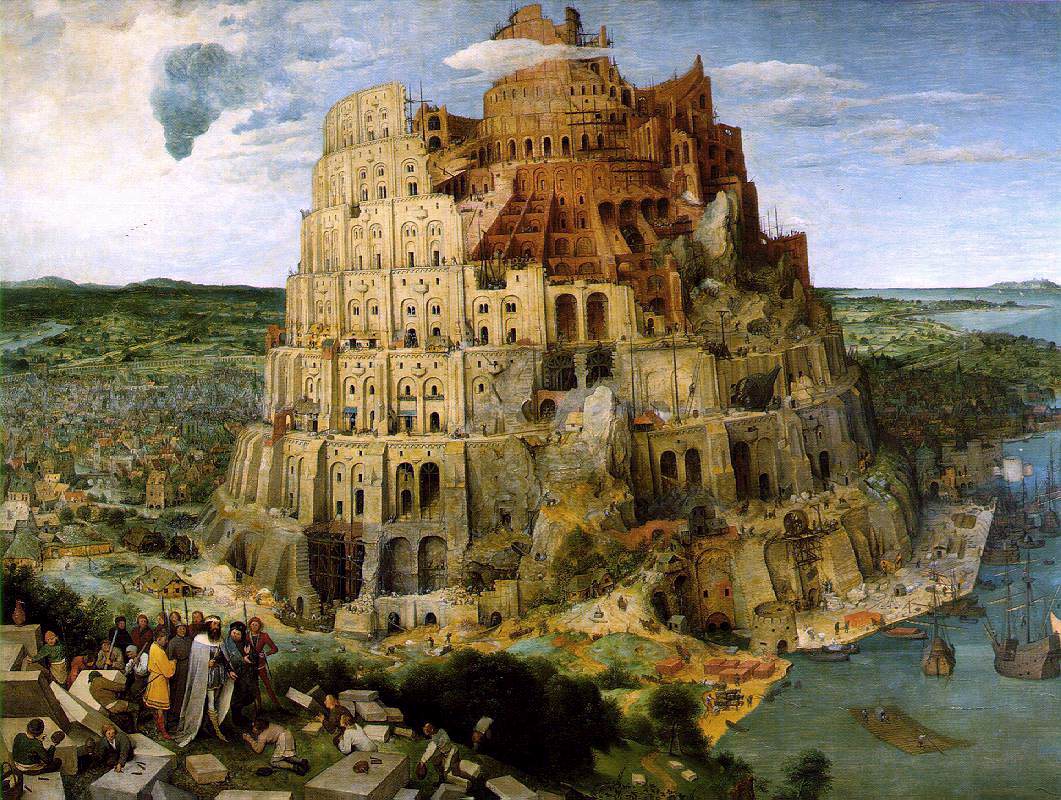
I got interested in roleplaying through the Lord of the Rings Trilogy (the movies, not the books, which I ha. . .we'll go into this another time) and RPGs like Morrowind. Naturally, I wanted to recreate how big those worlds felt in my games. I used to spend hours drawing maps, detailing fantastic locations, and developing my game world's mythology. It was a lot of fun.

It also took a lot of time. Preparing for these games requires a considerable time investment in the world building. This is in addition to the time required to prepare sessions. More importantly, epic campaigns also take a lot of time to complete. In my ten years of gaming, I was able to succeed at finishing exactly one of these epic games. The others fell apart for various reasons: I lost motivation, the game lost steam, players moved away, etc. Those are the risks you run when you go long.

The rewards, however, are real. Paramount among them is when your players begin treating it as a living breathing world. This does happen in shorter games too, but longer games provide more opportunity for this to happen. It also provides more opportunity to develop the NPCs and the Villains. Epic campaigns almost never have to rely on the generic big bad evil guy for a plot hook, and I think players roleplay more and more the longer they spend with their characters.
Recently, I've really come to enjoy the short game. My DCC RPG campaign, which kicked off last Sunday, has an overarching framework, but all of the adventures are episodic with the goal of each one being completable within a single session.

The benefits of the short game run directly contrary to the the problems of the long game. The game never loses steam because each session is different, which I find to be a motivating factor as a GM. If one player moves away or leaves, another can be folded into the group easily. The short game is also the ideal situation for a group with rotating DMs and offers a unique opportunity for group world-building.

The problems of the short game are numerous. The game can suffer from "villain of the week" syndrome, making the campaign feel more like a comic book or a TV show. There is seldom opportunity for the big world building in longer games, which may or may not be a drawback for some.It also lends itself to a kick-down-the-door and steal all the treasure type of play, which can be fun but repetitive.

The single greatest advantage of the short game is that it puts your players at the forefront of all the action. That's not to say it can't happen in the long game, but I've found that the machinery of longer games gives a lot of screen time to NPCs. Occasionally, too much.
If we go with a series of short games, I'm thinking of running a very simple one-shot Burning Wheel game. I feel it may be soon to introduce the group to yet another game as it was only last month I dropped the Heavy Metal cover of the DCC on the gaming table, but I think a very RP-intense session would be a good palette cleanser.

Friday, June 8, 2012

Conversations from the Gaming Table #1

I exposed the group I play Pathfinder with to DCC RPG last week. Everyone loved it. Well, almost everyone. One of the players really likes the crunchiness of Pathfinder and laments the absence of feats and skill points. I can understand how DCC RPG might feel very empty in comparison.

At this point, I have no interest in GMing a Pathfinder game ever again. The rules are just too cumbersome for the kinds of stories I want to tell. At the same time, I want my players to be excited about the games I run. If that means hacking the system to suit their needs a little, I'm more than happy to do so.

That's one of the core differences between a game like Pathfinder and DCC RPG. In the former, it's very hard to add or remove elements from the game without destroying the structural integrity of the system. Even published material can do this.. The simpler design of DCC RPG makes it much easier to add and remove elements without breaking the game.

Wednesday, May 16, 2012

Chasing the Dragon

This next sentence could be a complete falsehood: the majority of people who play roleplaying games either find their ideal system or they leave the hobby. It seems true to me, but that doesn't necessarily make it so. In my high school, when I began roleplaying, there was a rather large crowd of people interested in P&P gaming and we played a wide variety of systems: various editions of D&D, Werewolf, Vampire: The Masquerade, Mage, Big Eyes Small Mouth, Shadowrun, etc. I don't live around the area anymore, but, from what I can tell, a lot of those people don't play games anymore. Those who do pretty much play whatever system they have the most books for, or whatever is most nostalgic for them.

Maybe I have some genetic disorder where I'm predisposed to wanting to see what hue of grass is on the other side of the metaphorical fence, but I'm always looking at new systems. I've become pretty good at finding ones that fit particular needs but I've yet to find the one. This is not a quest for perfection; rather, the ideal system for me and my players.


Without getting into semantics, let's define the ideal system as one that serves my purposes best. These change depending on the type of game I want to play. The Burning Wheel game I'm running right now is intensely story driven. There's plenty of action, too, but each fight, due to the nature of the system, means a whole lot more as combat is so lethal. The players have to want to risk death and seem to do so only if it means accomplishing their goals. This is, bar none, the best ruleset I've found for any fantasy game where the focus is going to be on roleplaying. The Duel of Wits rules function like a social combat for negotiating conflict; players write beliefs as part of character creation and are rewarded for testing them in play; the lifepath system creates fully-formed personalities from which to easily build back stories.

It is everything I want for a campaign that will have a narrative focus. Should I want to do a dungeon crawler-style campaign or something flavored closer to high fantasy, it would be a poor choice. It's not that the rules couldn't handle those types of games; it's just not well suited for it. The mantra-like response I get to this idea is that the type of game is determined by the players, not the system. I feel like this is one of those nature/nurture arguments. Both are important, but to say one trumps the other is conjecture.

I've yet to find my ideal system for dungeon crawling campaigns. I've never played 1st or 2nd edition D&D, but 3.X and Pathfinder are definitely not those systems. At low levels, it's hard to see why, but anyone who has taken characters over level 10 can attest to the exercise in tedium that combat becomes and anyone who has DMed high-level is well-aware of the amount of prep work it takes to hold this game together.


I'm holding out for Dungeon Crawl Classics RPG, but I am skeptical. Without a doubt, it's going to replace Pathfinder for most of my high-fantasy needs, but I hesitate to say that it will be ideal. I hope I'm wrong.

And there is the other, larger issue at the core of this post: does a RPG system exist which handles RP-intense campaigns and combat-heavy games with equal grace and measure?

Saturday, May 12, 2012

Dying in the First Room, Coloring Outside the Lines

Last weekend we were supposed to play the next session of the Burning Wheel Campaign, In Service of the Bastard Lord, but one of our players had to help his +1 move.

Instead, we played Pathfinder, and I actually got to be a player! It was pretty short lived; we died in the first room. I can't remember if that ever happened before, but it was not unexpected. A two-man party without a healer isn't likely to survive too long in a dungeon that the DM described as a challenge for a full party of four.

After that, we broke out my copy of Wiz-War and spent the rest of our game day chucking fireballs at one another and stealing treasure. I actually won this time.

On Tuesday I ran a solo dungeon using the DCC RPG beta rules. The one player rolled ten 0-levels, and named all of them after American political figures, actors and actresses from world cinema, and famous, dead writers. By the end of the crawl, he had two left: Barack Obama, who is now a level 1 Warrior, and Arthur Den, a level 1 Wizard. My copy of the LE rule book is on its way, I believe.

I got my sets of Gamescience dice today. Too bad all of my players are out of town, I've been dying to use them. I thought they were going to take a long time to ink, but the crayon method is super fat and easy. I'll post some pictures of them soon.