One thing I've found is that players often lack for ways to spend their loot. After a few adventures they are usually able to afford any piece of gear they desire. Considering how much time is spent evenly and agreeably dividing the treasure, it should be a little more valuable. In an effort to create a much needed sense of economy and introduce some resource management into DCC RPG, I have created rules for equipment degradation.
Weapons
Weapons have three conditions: Good Repair, Damaged, and Broken. At the end of every encounter you must test to see if your weapon degrades. Roll the weapon’s damage die. If the result comes up a 1, it degrades a condition. If it was in good repair, it is now damaged. If it was damaged, it is now broken.
Damaged weapons are not as effective in combat. Reduce all damage done by half, rounded down to a minimum of 1. Track damaged weapons on your sheet by underlining them. This is to remind you that they need to be repaired.
Broken weapons are useless until repaired. Track broken weapons by crossing them out on your character sheet. This is to remind you that you can’t use them until they’ve been repaired.
Armor has three conditions: Good Repair, Damaged, and Broken. At the end of every encounter you must test to see if your armor degrades. Roll its fumble die. If the result comes up a 1, it degrades a condition. If it was in good repair, it is now damaged. If it was damaged, it is now broken.
Damaged armor is not as effective at protecting you. Reduce it’s AC bonus by half rounded down to a minimum of +1. Track damaged armor on your sheet by underlining it. This is to remind you that it needs to be repaired.
Broken armor offers no protection. Track broken armor by crossing it out on your character sheet. This is to remind you that you can’t use it until it’s been repaired.
Tools and Other Equipment
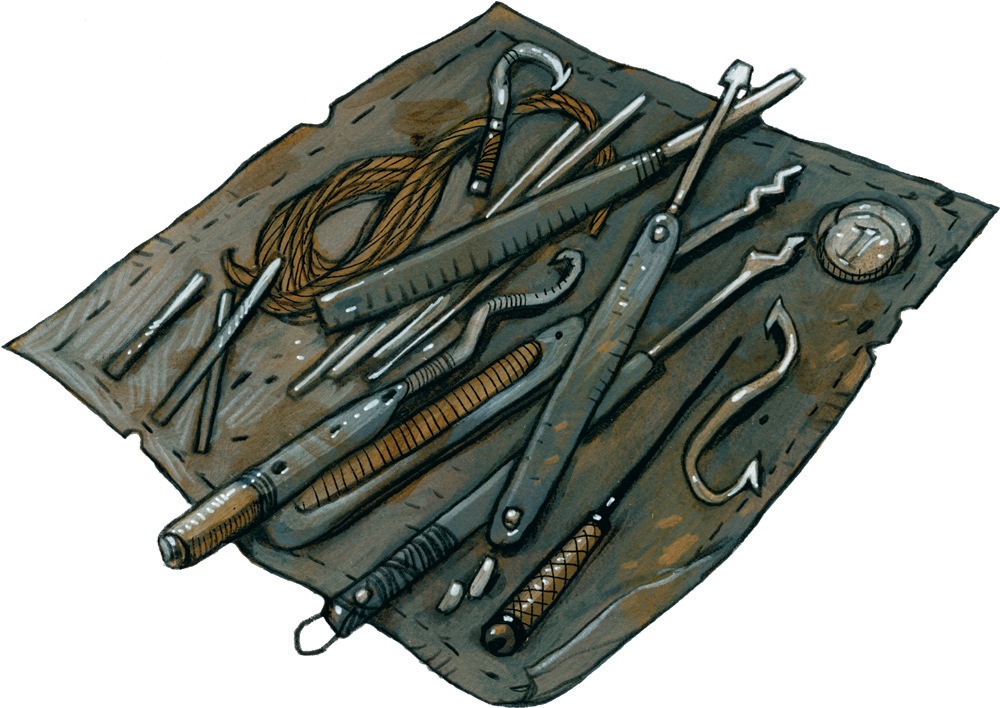
Unlike weapons and armor, tools only have two conditions: Good Repair and Broken. After each use, you must check to see if tools are broken. Roll 1d6. On a roll of 1, the item is broken. Unless they were masterwork quality, broken tools are worthless and cannot be repaired.
Repairing Equipment
The two most common ways to repair items are through using the appropriate skill or hiring a tradesperson in town. The difficulty and cost of repair will vary according to condition and equipment is sometimes so badly damaged it cannot be restored to its former glory.
DC to repair Damaged Equipment: 10
DC to repair Broken Equipment: 15
Cost to Repair Damaged Equipment: 1/4 of Market Price
Cost to Repair Broken Equipment: 1/2 of Market Price
Weapons and armor that were broken can be repaired but only partially. Each time a broken weapon is repaired, reduce it's damage die one step down the dice chain. If this would reduce its damage die below a d3, the weapon shatters and is permanently broken.
Each time broken armor is repaired, reduce its AC bonus by 1 and its fumble die is reduced -1d on dice chain. If an armor's AC bonus is ever reduced to 0, it is too damaged to salvage.
Eventually it will just be worth it to plunk down on a new piece of gear. Better make it masterwork this time!
Masterwork Equipment
Masterwork equipment is made of sturdier stuff than its more mundane counterparts. When rolling to see if a piece of equipment degrades, players may re-roll the die if it comes up a 1. If a second 1 is rolled, then the equipment degrades. Otherwise, it remains in its current condition.
Broken masterwork weapons and armor can be repaired to their original values. The costs are the same for hiring a tradesperson, but the DC and the risk for doing it yourself is higher.
DC to repair Damaged Masterwork Equipment: 15
DC to repair Broken Masterwork Equipment: 20
Players who do not succeed on these rolls still manage to crudely repair their weapons and armor. Reduce the damage die by one on the dice chain for weapons and reduce the AC bonus by 1 for armor and decrease its fumble die -1d on the die chain permanently. It's best to leave this to the professionals!
Damaged masterwork tools and gear are only repaired on a successful roll but do not degrade
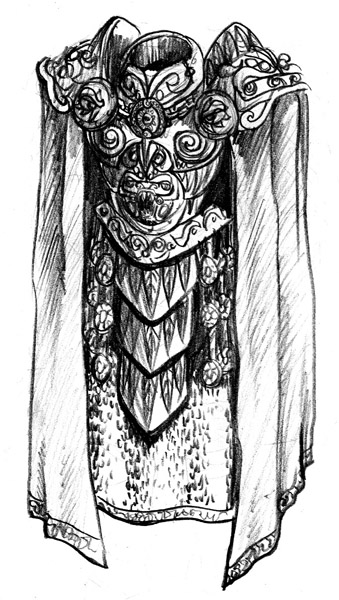
To represent this hardiness, all masterwork equipment costs twenty times the market price. Yes, I'm seriously going to charge my players 24,000 gold for a suit of masterwork full plate. Put aside these mechanics for a moment and consider what makes an item masterwork. The workmanship is only half of the equation. The other half is the raw materials. This is your chance to really instill a sense of awe and value into an item. That 24,000 suit of armor? It's made from dragonscale, and you better believe there's only one of them for sale in the entire kingdom. Players who can muster the raw materials themselves (easier said than done) will see a 50% discount.
Magic Items
Magic items follow the same degradation rules as masterwork items.
Salvaged Kit
Weapons and armor salvaged from dungeons and its denizens should have their conditions rolled randomly on the table below.
1: Broken
2-5: Damaged
6: Good Repair
For tools and other equipment, roll on this table:
1-2: Broken
3-6: Good Repair
The shops back in town aren't interested in your trash. They will only purchase items in good repair.