This is an idea I've had for a long time now, exploring the story of how a Wizard happens. On a whim last week, I began thumbing through my Burning Wheel books. I don't know why I didn't look to this system for this kind of story sooner, but it's a perfect fit.
A week later, and we have three freshly burned characters ready to begin their journey down the path of arcane mastery.
I plan on posting something from our sessions, either audio files or transcripts. I still haven't decided. I will likely collect material for a few sessions before taking this anywhere, but I haven't been this excited for a game in years.
Monday, March 18, 2013

Friday, March 15, 2013
What Are We Gonna Do With All This Gold?

Assuming these adventurers don't become dragon chow, what would they do with all of this gold? If your games are anything like mine, you can't just roll down to the corner store and pick up a Wand of Magic Missile, a belt of Healing Potions, and that Vorpal Longsword your Warrior has been eyeing. That kind of availability disrupts the balance of the game and, more importantly, it contradicts the nature of magic—rare, feared, misunderstood, inspiring. So what value does gold have as a player reward?
While most adventurers begin the game poor, by the time they gain their first level they have already made more money than the average fantasy day laborer makes in their entire life. Not long after they should be able to afford the top tier of craftsmanship for their gear. And after that? I don't know, but gold is by far the most common reward and all of those loot stacks the party drags back to their hideout seem pretty redundant.
To answer my own question: material wealth as a player reward stops being rewarding once a character's basic needs are met. While all games should be trading in the currency of what we'll call "story rewards", this should be the most common payout your adventurers receive once their basic needs are met. Give them influence, power, the opportunity to accomplish their personal goals.
Of course, this is a generalization. Some people are perfectly content to plumb the depths of an endless underground maze, slaying rooms full of monsters for no other reason than they stand between the adventurers and their next pile of gold. Even in that type of game, which I do enjoy, the loot handed out can be more interesting by tying it to the narrative. It doesn't solve the essential problem of what to do with the accumulated wealth, but it does at least make feel more purposeful, which I suppose is what any reward aspires to, story or otherwise.
While most adventurers begin the game poor, by the time they gain their first level they have already made more money than the average fantasy day laborer makes in their entire life. Not long after they should be able to afford the top tier of craftsmanship for their gear. And after that? I don't know, but gold is by far the most common reward and all of those loot stacks the party drags back to their hideout seem pretty redundant.
To answer my own question: material wealth as a player reward stops being rewarding once a character's basic needs are met. While all games should be trading in the currency of what we'll call "story rewards", this should be the most common payout your adventurers receive once their basic needs are met. Give them influence, power, the opportunity to accomplish their personal goals.
Of course, this is a generalization. Some people are perfectly content to plumb the depths of an endless underground maze, slaying rooms full of monsters for no other reason than they stand between the adventurers and their next pile of gold. Even in that type of game, which I do enjoy, the loot handed out can be more interesting by tying it to the narrative. It doesn't solve the essential problem of what to do with the accumulated wealth, but it does at least make feel more purposeful, which I suppose is what any reward aspires to, story or otherwise.
Wednesday, March 13, 2013
Freebie Alert (Kind of): The Quiet Year

The Quiet Year is a map game. You define the struggles of a post-apocalyptic community, and attempt to build something good within their quiet year. Every decision and every action is set against a backdrop of dwindling time and rising concern.
The game is played using a deck of cards – each of the 52 cards corresponds to a week during the quiet year. Each card triggers certain events – bringing bad news, good omens, project delays and sudden changes in luck. At the end of the quiet year, the Frost Shepherds will come, ending the game.
Check out the site here! You will notice that the game is not actually free. Buried Without Ceremony, the publisher, has a program called "Paying With Good Deeds". Basically, they will send you a PDF of any of their games for a number of good deeds. The Quiet Year PDF can be yours for about an hour of volunteer work, donating food or clothing, or cleaning up a local park. More publishers should offer programs like this.
Monday, March 11, 2013
Crawl! #6 Review

Crawl #6 is the end product of a contest Reverend Dak ran on the Goodman Game forums. Forumers were asked which classes they wanted to see most, then the community submitted their versions for consideration. The best Bard, Gnome, Ranger, and Paladin are featured in this issue.
One of things I really enjoy about the DCC RPG is how many archetypes fit into the four base classes. Clerics can easily fill their iconic role or play more like a Druid depending upon your alignment. Give a Warrior a pet and you're not too far away from having a Ranger. You can see where I'm going with this.
Let me start with the good. The Bard class is very well done and is one of the few classes I feel isn't covered in the four base classes. Bards can use their performances to affect their audiences. These effects might grant bonuses to will saves or act like Charm Person spell. It feels very balanced, and I will definitely be including this in my future campaigns.
I was particularly impressed by the Gnome. They are essentially slightly more Hardy Wizards with a restricted spell list to reflect their nature. Gnomes are typically the least favorite of all standard fantasy races, but I like them quite a bit. My only complaint is that this is only a five level class. The creator explains this as they usually lack the penchant for long term adventuring, but I feel this is a bad decision. Most members of the other races do not become adventurers. That's what makes them special. I will be expanding this to a full ten level class before including it in my campaign.
I have mixed feelings about the Paladin. I would best describe it as a cross between the Warrior and Cleric class. It gets a Smite Die, which functions like a Deeds die but only against unholy enemies. It casts spells and suffers disapproval as the Cleric. It also has a secondary disapproval-like table. I'm not sure I see the need for a full Paladin class. Simply rolling a Warrior with a belief in god and adding a few unique uses of the Mighty Deeds to reflect this devotion would cover it, in my opinion. I think the inclusion of more disapproval is not particularly exciting because the normal disapproval is already so punishing. Still, I think this is useful to take bits and pieces of and adapt as you see necessary.
I feel similarly about the Ranger class. It has a deeds die. It gets favored enemies. I just don't feel the need for a full class when the Warrior covers this so well. Unlike the Paladin, I don't see much in the way that there is to take and adapt.
Despite my hesitation about some of these classes, I'm never disappointed when the envelope from Stray Couches Press arrives in my mailbox. As with all community-generated content, your mileage is going to vary. If you haven't ordered it yet, you need to add this to your collection. Don't forget, Crawl! is now available in PDF form, too!
Friday, March 8, 2013
GM Burnout
One thing I haven't written about is GM burnout. Everyone who ever helms the mantle of game master eventually goes through this. I am currently experiencing this. Hard.
I've been running games pretty consistently for about three years now. I don't know if it's because I've almost exclusively been playing fantasy games or it's more of a general burnout, but it is has sapped all motivation to work on some of the longer term projects I had going (patrons, megadungeon, new classes,).
Which is unfortunate, because it's my turn in this rotating GM campaign a friend and I are running. I have an adventure in mind, too, but there is no gas in the tank to draw maps, create monsters, and draft a compelling narrative. I would much rather just play complicated board games or paint the various miniatures I have acquired.
But I can't, so I've been thinking about ways to break this. The short term is module dependency. I have greedily snatched up every single DCC adventure that Goodman Games has put out and only played a handful of them. I also backed the Appendix N Adventures Kickstarter, and those should ship by the end of the month giving me more crutches on this road to recovery.
I have, as of yet, not come up with a more long term option.
I've been running games pretty consistently for about three years now. I don't know if it's because I've almost exclusively been playing fantasy games or it's more of a general burnout, but it is has sapped all motivation to work on some of the longer term projects I had going (patrons, megadungeon, new classes,).
Which is unfortunate, because it's my turn in this rotating GM campaign a friend and I are running. I have an adventure in mind, too, but there is no gas in the tank to draw maps, create monsters, and draft a compelling narrative. I would much rather just play complicated board games or paint the various miniatures I have acquired.
But I can't, so I've been thinking about ways to break this. The short term is module dependency. I have greedily snatched up every single DCC adventure that Goodman Games has put out and only played a handful of them. I also backed the Appendix N Adventures Kickstarter, and those should ship by the end of the month giving me more crutches on this road to recovery.
I have, as of yet, not come up with a more long term option.
Wednesday, March 6, 2013
Freebie Alert: Lady Blackbird
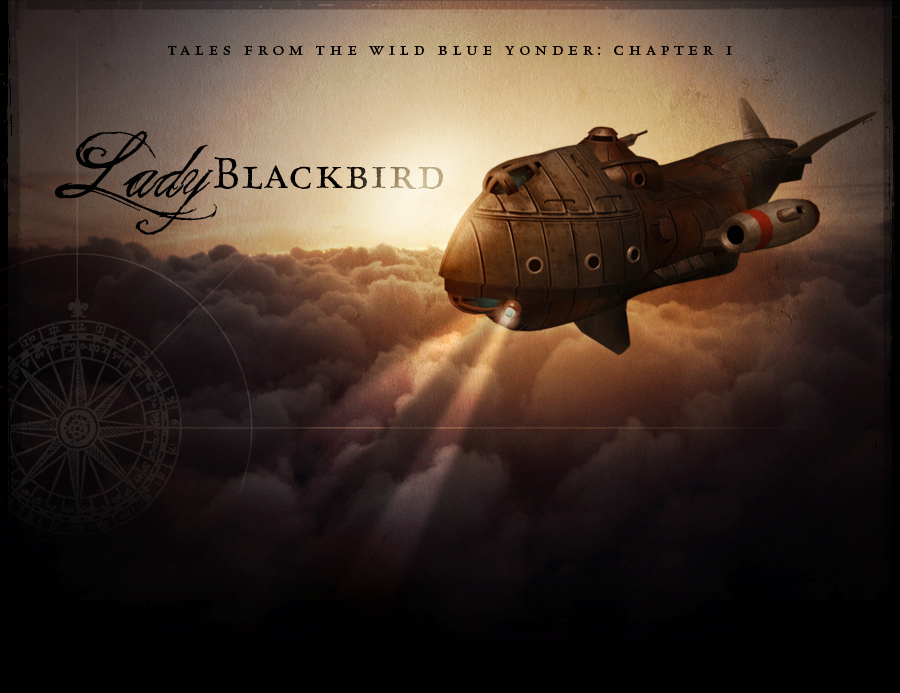
HOWEVER, just before reaching the halfway point of Haven, The Owl was pursued and captured by the Imperial cruiser Hand of Sorrow, under charges of flying a false flag.
EVEN NOW, Lady Blackbird, her bodyguard, and the crew of The Owl are detained in the brig, while the Imperial commander runs the smuggler ship’s registry over the wireless. It’s only a matter of time before they discover the outstanding warrants and learn that The Owl is owned by none other than the infamous outcast, Cyrus Vance.
How will Lady Blackbird and the others escape the Hand of Sorrow?
What dangers lie in their path?
Will they be able to find the secret lair of the pirate king? if they do, will Uriah Flint accept Lady Blackbird as his bride? By the time they get there, will she want him to?
Go. Play. And find out.
Lady Blackbird is an adventure module for 2-6 people. It contains a starting situation, setting, pregen characters, and quick-play rules perfect for a no-prep game of 1-3 sessions or more.
Check it out here!
Monday, March 4, 2013
The Dungeon Alphabet Review

Players and GMs will be familiar with most of the topics covered in this book. Altars, dragons, gold, traps, undead, pretty standard dungeon-defining elements. Each entry provides a summary, why players fear them, and the role role they play in a dungeon. The meat of each entry is the random table. If your eyes go wide at the sight of random tables, this is the book for you. This slim book is packed full tables to spruce up these well-worn dungeon elements. Essentially, this is a "how-to" manual for making your encounters interesting.
While some of the entries are going to be more useful than others, this book is really indispensable for game masters. Entries like the "100 Random Book Titles" are a great way to add detail on the fly to the otherwise nondescript musty brown tomes crowding the Wizard's bookshelf (they can't all be full of spells!). The entry on Kobolds, for example, is just one of many that add flavor to an enemy that is often encountered but seldom interesting.

I went for the limited edition cover. The production quality of this book is similar the limited edition DCC RPG, which is to say, worth it. I tend to shy away from such purposes, but these are reference materials built to last and will look great on your bookshelf. Also, I find the original cover a little too crowded for my taste. At this point, the limited edition is probably long gone from your FLGS' shelves but I would definitely snatch it up if you happen upon this gem.
Monday, February 18, 2013
Eclipse: New Dawn for the Galaxy Review
Before I discuss gameplay, let's talk about the actual physical game itself. This is easily the biggest box on my gaming shelf and for good reason. This veritable chest contains hundreds of game components—ships, hexes, ship upgrade parts, technology tiles, populations cubes, influence disks, ancient alien ships, etc. Everything is pretty high quality. Each hex, for example, has a unique image on it. Those who have played Twilight Imperium will likely criticize the relatively low level of detail on the ships used, but I don't think they detract from the game in any way. The sheer number of components may lead some to believe that this is a very complex game. The good news is that it's not.
 |
| This game requires a lot of room. We had to play on the floor. |
The game consists of 9 turns in total, no more, no less. Turns progress clockwise around the table as each player performs an action until they pass. These consist of explore, influence, move, research, build, and upgrade. At the beginning of the game, the board consists of a central hex with the other players' hexes surrounding it. The board grows through exploration, and the only limit to the galaxy is the number of hexes. Exploration is vital, as building new ships, researching new technologies, and upgrading your fleet requires resources. It's also risky; there's a pretty good chance that you will have to battle some ancient ships at least a few times in the course of a game, not to mention the possibility of player vs. player conflict.
Combat is simple and fast. Ships of the same type battle first, with the ones with the highest initiative shoot first. As a default, only sixes are hits and only do one damage a piece. Of course, by the end of the game, most of your ships will be tougher, faster, or more powerful depending on what you choose to research, meaning few combats are ever alike.
 |
| Each player gets their own character sheet. |
So how exactly does one win this game? Through victory points. At the end of the ninth turn, you total the points for every hex you control, the research you've done, the ships you've destroyed, and any alliances you've made. This is one of those games where losing is just as fun as winning. There is a sense of narrative that unfolds as players take turns exploring, researching, and strengthening their empire.
One thing I should mention is the length of this game. The box says 30 minutes per player, but I have never seen it run that fast. I would say closer to an hour per player for newbies and maybe 45 minutes for those with some familiarity. This isn't really a criticism though; just know that if you break this out, it will likely be the only game you play that day.
Out of all the board games I've been playing lately, this is my favorite. Fans of 4X games will love this, and those who were intrigued by Twilight Imperium but put off by the complexity will find much to enjoy here. There is a fairly hefty price tag, but it's definitely worth it.
Friday, February 15, 2013
And to Whom Do We Make Out the Check?
This is a debate that cropped up in my group in the past few weeks. When we award experience, are we rewarding the player or the character? The DM took the stance that for XP goes to the character. This seems rather logical and the alternative, of rewarding players for their actions rather than the specific characters, may seem odd but bear with me for a moment.
XP is not a thing that exists in the world of the game. It is an abstract method of reward for the character completing certain tasks. While the character would explain any growth a result of some period of risk, training, or research, none of those tasks are completed unless the player wills their character to do it. To argue otherwise creates an artificial separation between the player and their character.
This may not seem like a problem, but the second you introduce a dream-based adventure or give the players alts to use for a scene the question rears its head: do we award XP for this? If we're talking about reality, that is, how things function in the real world, why should I give XP for playing out a dream based adventure or for someone else's experiences? For these questions, I have a simple answer: because gaming time is limited. If you ask the players to roll dice, they should be rewarded experience. Otherwise, those scenes should only exist as narrative pieces.
XP is not a thing that exists in the world of the game. It is an abstract method of reward for the character completing certain tasks. While the character would explain any growth a result of some period of risk, training, or research, none of those tasks are completed unless the player wills their character to do it. To argue otherwise creates an artificial separation between the player and their character.
This may not seem like a problem, but the second you introduce a dream-based adventure or give the players alts to use for a scene the question rears its head: do we award XP for this? If we're talking about reality, that is, how things function in the real world, why should I give XP for playing out a dream based adventure or for someone else's experiences? For these questions, I have a simple answer: because gaming time is limited. If you ask the players to roll dice, they should be rewarded experience. Otherwise, those scenes should only exist as narrative pieces.
Wednesday, February 13, 2013
Freebie: Stars Without Number
 |
You should cruise over to DriveThruRPG and snag a free copy of Stars Without Number. The ruleset looks similar to OSR versions of D&D but, you know, science fiction. Even if you never run it, it's worth the read.
|
Subscribe to:
Posts (Atom)