Monday, July 9, 2012
No Post Today
I just spent about an hour typing up the new post and blogger has decided to eat it. So instead of posting the rough draft of my Orc class for DCC RPG, I am posting this. This is just as good though, right?

Friday, July 6, 2012
Crawl!

Just as I thought I was going to have nothing to post about, Reverend Dak dropped this in my mailbox today. Now, given that I've only had it for about two hours and haven't really had a chance to go through it, I can't really give a proper review.
What I have managed to digest is very useful. The DCC RPG book doesn't have any treasure tables or mechanical guidelines for handing out treasure. What it does have is an explicit warning about handing it out carelessly. The world of DCC RPG is a grim one, and most commerce happens with as an exchange of goods, not coin. The piles of gold we associate with fantasy gaming are only won through adventuring, and even then it is no guarantee.
This issue gives us plenty of random tables fit to the scale of DCC RPG. It's also jam-packed with lots of art from various artists across the blogosphere who are involved in this game one way or another. My normal gaming schedule has been a little off this week, so rather than run my usual Sunday game I will tear through this. I'll also be working on my first homebrew class for DCC RPG which is in the final stages (I hope) right now. In the meantime, get over to Dak's blog and snag yourself a copy now!
Wednesday, July 4, 2012
The Academy is Closed Today

There is no post today because I blew my fingers off with these. They should regrow in 1d2 days.
Monday, July 2, 2012

Friday, June 29, 2012
Burning Wheel Recap
I ran that simple scenario for some of my players last night. Fun was had by all, but I don't know that they are sold on the game. Character creation is very complicated when the players don't know what half the stuff means. The actual play was a blast, and the only thing that gave them any trouble were the full Fight! rules. I chalk this up to their inexperience. None of them have played non-D20 based games, and Burning Wheel is a pretty radical game to throw in their laps.
Their favorite part is the collective world building, and I think we'll be importing it into our other games almost immediately. The other stuff, I think, will make sense with time, assuming we play it again.
Next is DCC RPG, which is a pretty big hit with all but one of the players.
Their favorite part is the collective world building, and I think we'll be importing it into our other games almost immediately. The other stuff, I think, will make sense with time, assuming we play it again.
Next is DCC RPG, which is a pretty big hit with all but one of the players.
Wednesday, June 27, 2012
This Wheel's on Fire

Rather than run "The Sword", which is a fine introductory adventure in of itself, I opted to pitch them a very simple theme: the players are Trolls guarding a bridge. I left it up to them to decide what they're guarding and who they're guarding it from, and they really took to the world-building part of the game. Here is what they came up with:
A few hundred years ago, the Trolls lived in the Aazoth forest. That was before the Elves moved in and swept them from their homeland, murdering many in the process. Afterwards, they traveled north, through the Grimgör Mountains, where they clashed with the Dwarfs. Deep beneath the earth, the Trolls seethed with hatred and vowed to someday get revenge. It wasn't until a wizard by the name of Golgomoth offered to assist them that such a day would be come possible. The Wizard plunged the land into constant, creeping darkness, allowing the Trolls to wander the surface freely without fear of turning to stone.

Monday, June 25, 2012
Angry Gods

Even if you succeed, your deity may be angered by how you've chosen to wield his power. Heal people of opposed alignments of Gods, rely on your divine power frivolously, or act against the code of your deity and you will find yourself consulting the deity disapproval chart. Powerful your God may be, but they are also fickle and angry.
Furthermore, every time you roll within your disapproval range, it increases by one. If yesterday's session is any indication, this is one of the most fun mechanics in the game. The party's Cleric fell under the spell of Lizardman Cleric of Bobugbubilz. Within that one battle, I watched the disapproval range of our Cleric change from 1 to 1-8. I know the results are random, but the dice picked a good time to go sour as our Cleric acted in faith of another god. Somehow, it seems, they knew.
Friday, June 22, 2012
Keeping it Short vs. Going Long
The Pathfinder game I was playing in wrapped up last night. We did not succeed at our given task, but we did not die. As I've said in previous posts, I'm okay with failure. Not every game can end with the PCs coming out on top, and whether they succeed, fail, or die, all of these stop the game. I got my cool moment last session, when my Dwarf Cleric single-handedly dragged a Troll that one other player and I slayed back to town.
As a group, we're a little on the fence about what to do next. One player, who has never DMed, wants to run his first, epic campaign. Others have suggested doing a series of one-offs to give us a break from a longer game. I'm happy to play either, but the conversation got me thinking about the differences between long and short games.
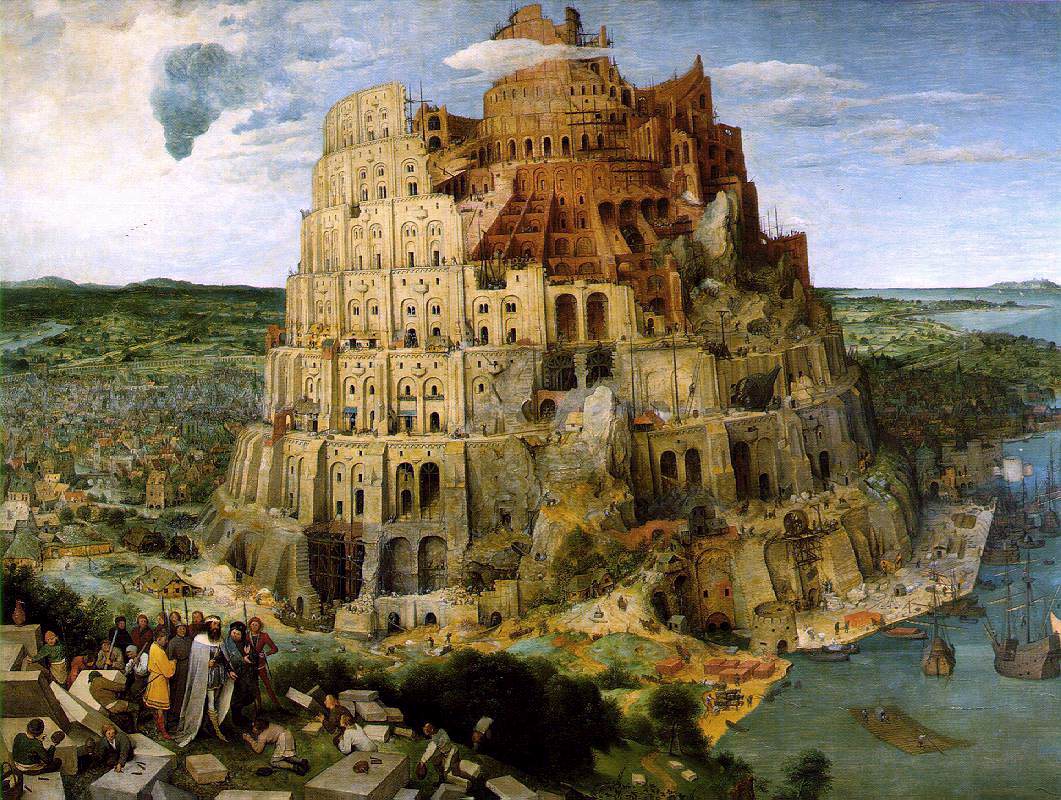 I got interested in roleplaying through the Lord of the Rings Trilogy (the movies, not the books, which I ha. . .we'll go into this another time) and RPGs like Morrowind. Naturally, I wanted to recreate how big those worlds felt in my games. I used to spend hours drawing maps, detailing fantastic locations, and developing my game world's mythology. It was a lot of fun.
It also took a lot of time. Preparing for these games requires a considerable time investment in the world building. This is in addition to the time required to prepare sessions. More importantly, epic campaigns also take a lot of time to complete. In my ten years of gaming, I was able to succeed at finishing exactly one of these epic games. The others fell apart for various reasons: I lost motivation, the game lost steam, players moved away, etc. Those are the risks you run when you go long.
The rewards, however, are real. Paramount among them is when your players begin treating it as a living breathing world. This does happen in shorter games too, but longer games provide more opportunity for this to happen. It also provides more opportunity to develop the NPCs and the Villains. Epic campaigns almost never have to rely on the generic big bad evil guy for a plot hook, and I think players roleplay more and more the longer they spend with their characters.
 Recently, I've really come to enjoy the short game. My DCC RPG campaign,
which kicked off last Sunday, has an overarching framework, but all of
the adventures are episodic with the goal of each one being completable
within a single session.
Recently, I've really come to enjoy the short game. My DCC RPG campaign,
which kicked off last Sunday, has an overarching framework, but all of
the adventures are episodic with the goal of each one being completable
within a single session.
The benefits of the short game run directly contrary to the the problems of the long game. The game never loses steam because each session is different, which I find to be a motivating factor as a GM. If one player moves away or leaves, another can be folded into the group easily. The short game is also the ideal situation for a group with rotating DMs and offers a unique opportunity for group world-building.
The problems of the short game are numerous. The game can suffer from "villain of the week" syndrome, making the campaign feel more like a comic book or a TV show. There is seldom opportunity for the big world building in longer games, which may or may not be a drawback for some.It also lends itself to a kick-down-the-door and steal all the treasure type of play, which can be fun but repetitive.
The single greatest advantage of the short game is that it puts your players at the forefront of all the action. That's not to say it can't happen in the long game, but I've found that the machinery of longer games gives a lot of screen time to NPCs. Occasionally, too much.
 If we go with a series of short games, I'm thinking of running a very simple one-shot Burning Wheel game. I feel it may be soon to introduce the group to yet another game as it was only last month I dropped the Heavy Metal cover of the DCC on the gaming table, but I think a very RP-intense session would be a good palette cleanser.
As a group, we're a little on the fence about what to do next. One player, who has never DMed, wants to run his first, epic campaign. Others have suggested doing a series of one-offs to give us a break from a longer game. I'm happy to play either, but the conversation got me thinking about the differences between long and short games.
It also took a lot of time. Preparing for these games requires a considerable time investment in the world building. This is in addition to the time required to prepare sessions. More importantly, epic campaigns also take a lot of time to complete. In my ten years of gaming, I was able to succeed at finishing exactly one of these epic games. The others fell apart for various reasons: I lost motivation, the game lost steam, players moved away, etc. Those are the risks you run when you go long.
The rewards, however, are real. Paramount among them is when your players begin treating it as a living breathing world. This does happen in shorter games too, but longer games provide more opportunity for this to happen. It also provides more opportunity to develop the NPCs and the Villains. Epic campaigns almost never have to rely on the generic big bad evil guy for a plot hook, and I think players roleplay more and more the longer they spend with their characters.
The benefits of the short game run directly contrary to the the problems of the long game. The game never loses steam because each session is different, which I find to be a motivating factor as a GM. If one player moves away or leaves, another can be folded into the group easily. The short game is also the ideal situation for a group with rotating DMs and offers a unique opportunity for group world-building.
The problems of the short game are numerous. The game can suffer from "villain of the week" syndrome, making the campaign feel more like a comic book or a TV show. There is seldom opportunity for the big world building in longer games, which may or may not be a drawback for some.It also lends itself to a kick-down-the-door and steal all the treasure type of play, which can be fun but repetitive.
The single greatest advantage of the short game is that it puts your players at the forefront of all the action. That's not to say it can't happen in the long game, but I've found that the machinery of longer games gives a lot of screen time to NPCs. Occasionally, too much.
Wednesday, June 20, 2012

Friday, June 15, 2012
Dungeon Crawl Classics RPG Birthday Bash
This Sunday is my birthday. Sunday is also games day around these parts (well, one of them). Two of my players have been away from my gaming table these last few months and haven't yet seen the glory that is DCC RPG. We'll be skipping The Funnel for this outing, as I've had my fill of murdering droves of peasants. For the moment anyway.
That doesn't mean I have anything less horrific planned for my group. In the coming weeks I'll post the full adventure, but here is an preview of my first homebrew adventure for the DCC RPG.

That doesn't mean I have anything less horrific planned for my group. In the coming weeks I'll post the full adventure, but here is an preview of my first homebrew adventure for the DCC RPG.
The area around the meteorite is imbued with powerful arcane energy. A Wizard who casts Detect Magic will find that everything, including the air, is emitting a powerful magical aura. This aura extends for a one mile radius in all directions around the impact site. All arcane spellcasters receive a +5 bonus to their spellcaster check while within range of the impact site. Likewise, this same bonus applies to all corruption rolls.
Non-casters and magicians who refrain from casting are not safe from the effects of this aura. Each hour any living creature spends within range of the impact site must succeed a DC 15 Will save or roll 1d24 on the table below.
| 1 | Wings sprout from your back. Roll 1d5 to determine if they are (1) feathered (2) scaly (3) fleshy (4) skeletal (5) insect. All Fly checks should be made untrained. |
| 2 | One of your arms splits in two up to the wrist and a fully formed hand grows at the end of each stump. This mutation allows them to wield either a two-handed weapon in one hand or two weapons on one arm without penalty. |
| 3 | Roll 1d3 and apply the appropriate result: (1) Your legs fuse together and become scaly, like snake flesh. All Move Silently rolls are rolled as if the character were trained and with a +2 bonus. Your character leaves behind a slimy trail on smoother surfaces, such as stone or marble (2) Your legs mutate and shape themselves into grasshopper’s legs, granting a +2 on jump and acrobatics checks. (3) Your character’s legs harden into tree trunks reducing your base speed by half. Each round, the roots attempt to plant themselves into the ground. Characters who succeed on a DC 10 strength check prevent this from happening. While planted in the ground, the roots drink up nutrients healing 1d8 hit points per round. Cutting the roots off prevents them from burrowing, but they will grow back in 1d4 hours. |
| 4 | Gills appear on your neck allowing you to breathe underwater. Characters who fail to swim for an hour once per day begin to suffocate. Each hour beyond the 24th spent away from water, they must succeed on a DC 15 (+1 for each additional hour) Fort save or suffer 1d6 damage. |
| 5 | A second, smaller head sprouts from your shoulder. This second head is fully functional and has a completely independent brain. Roll 1d3 to determine its alignment: (1) Lawful (2) Neutral (3) Chaotic. Though it may find itself at odds with its host body, it has a sense of self preservation and will never endanger its life purposely over a disagreement. If either head is severed, the remaining one takes over or maintains control of the body. |
| 6 | Spines protrude from your flesh on your knees, elbows and back. Take 1d6 damage. All grapple checks are made with a -2 penalty against this opponent. A successful grappler takes 1d3 per round while maintaining a grapple. Characters may increase their unarmed damage by +1 on the dice chain. |
| 7 | The character’s hands mutate into one of the following forms, granting a claw attack. Roll a 1d4 and apply the appropriate result (1) skeletal claws (2) eagle claws (3) bat claws or (4) slimy frog claws. Attacks made with these weapons deal 1d6 damage. |
| 8 | The character’s flesh hardens into insect-like plates of chitin granting a +2 natural armor bonus. All skill checks are made with a -2 armor check penalty. |
| 9 | A tail sprouts from your character’s behind. Roll 1d3 to determine what effect this produces (1) cat’s tail, +2 to all reflex saves and balance-related skill checks, (2) an alligator’s tail, granting +2 to all swim checks and a natural attack dealing 1d4 bludgeoning damage or (3) scorpion’s tail, granting a natural attack that deals 1d4 piercing damage + poison. |
| 10 | Your character’s hair begins growing rapidly, a foot’s length every ten minutes. Observant ropemakers will notice its durability and could easily braid sections of it into usable rope. |
| 11 | One of your character’s arms mutates into a mass of tentacles. Roll 1d4 for to determine how many tentacles there are. A character gains a number of action dice equal to the result. |
| 12 | Your character’s skin becomes translucent. Everyone who gazes upon your visage must succeed at a DC 12 Will save or become frozen with fear. Those who fail the save may re-attempt once a round. |
| 13 | A clock appears on your character’s stomach. All move silently checks are made at a -1 penalty due to its incessant ticking. Roll 1d4 to determine how often the cuckoo inside springs out and crows (1) every 15 minutes (2) once every hour (3) once every 12 hours (4) once a day, at midnight. |
| 14 | Roll 1d4. Your character’s head mutates into one of the following forms: (1) lion (2) raven (3) dragon (4) ant. All forms grant a bite attack, except for the raven who pecks. All attacks deal 1d6 damage. Characters retain the ability to speak, though their voices change due to the mutation. |
| 15 | Roll 1d5. The result is the number of fingers that have been transformed into keys on one hand. Each key will unlock the first door it’s used upon and no other. If all of the fingers are affected, it is impossible to wield a weapon in that hand and all fine-motor skills automatically fail. If the majority are affected, attacks are made at -4 on the dice chain and all skill checks are made as if they are untrained. If a minority are affected, all attacks are and skill checks are made with a -2 penalty. |
| 16 | Your eyeballs fly out of their sockets and begin circling the top of your head like two tadpoles swimming after each other. While this is happening, you have 360° vision and receive a +1 bonus to all sight-based perception checks. You also suffer a -2 penalty to all Personality based checks. |
| 17 | Horrible pustules grow all over your body and begin to itch. Roll 1d5 to determine what’s inside. (1) honey (2) wine (3) mercury (4) gasoline (5) molten rock, take 1d4 damage each time one is popped. |
| 18 | Your skin becomes the texture of parchment. Scratching yourself or suffering wounds makes it fall peel and it can be easily torn off your person. To the unknown, there is no distinguishable difference between this and normal parchment. |
| 19 | Your character begins sneezing uncontrollably. Roll 1d4 to determine what happens each time you sneeze. (1) A swarm of angry bees bursts forth from your mouth (2) A bouquet of flowers erupts forth from your mouth (3) lightning strikes at the exact moment you sneeze followed immediately after by deafening thunder (4) A 20-foot cloud of fog surrounds you. |
| 20 | Your character feels a prickling in their arm. Someone or something has carved a message into it. The first message is always a question. Players may respond by carving their message into their flesh. Each message sent or received deals 1d3 damage. |
| 21 | You feel a tingling in your ears, mouth, and nose. Roll 1d4 to determine what crawls out (1) sandworms (2) spiders) (3) snakes or (4) slugs. Natural sleep is impossible while this effect is occurring, though characters may rest using magical or chemical means. |
| 22 | Horns sprout from your head. Roll 1d3 to determine what form they take (1) ram (2) bull or (3) rhinoceros. Your character gains a gore attack dealing 1d4 damage. |
| 23 | Each time speech is attempted roll 1d8 and replace your character’s natural voice with one of the following sounds (1) a busy tavern (2) a hideskin drum (3) horse hooves against stone (4) glass shattering (5) a door being slammed shut repeatedly (6) waves crashing against a rocky shore (7) church bells ringing at Sunday mass (8) two swords striking each other. These effects are inaudible to the speaker, who hears their voice normally. |
| 24 | You feel your teeth shift in your mouth and taste blood. Upon inspection, you notice that your fangs have become frighteningly long and sharp. You gain a bite attack that deals 1d4 damage. In addition, each time you successfully deal damage using this attack, you heal a number of hit points equal to the damage dealt. Hit points gained this way can take you past your maximum HP. |
Subscribe to:
Comments (Atom)